

🤖How EdTech Startups Can Use AI to Improve Counselling Efficiency
The EdTech landscape is rapidly evolving, with a growing demand for personalized educational and career guidance. For startups in this space, scaling effective counselling services can be a major challenge. The solution lies in integrating Artificial Intelligence (AI), which acts not as a replacement for human counselors, but as a powerful force multiplier.
AI can significantly enhance the efficiency of counselling, allowing EdTech platforms to serve more students with deeper, data-driven insights.
1. Automating the First-Line of Support: 24/7 Virtual Assistants
Traditional counselling involves a lot of routine, repetitive queries about course structures, deadlines, application processes, and general FAQs. This is where AI excels.
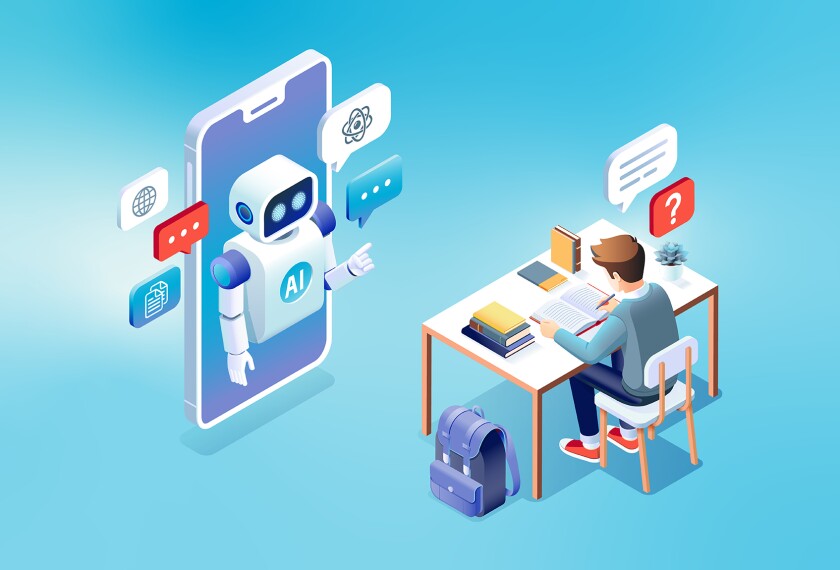
- Intelligent Chatbots/Virtual Counsellors: EdTech startups can deploy AI chatbots, powered by Large Language Models (LLMs), to handle up to 80% of common student inquiries instantly.
- Efficiency Gain: Freeing up human counsellors from answering the same questions repeatedly, allowing them to focus on complex, high-value, and sensitive cases.
- Benefit to Students: Providing 24/7, instantaneous support that is not limited by office hours or geographical location.
2. Hyper-Personalization through Predictive Analytics
Counselling is most effective when it is proactive and tailored. AI can analyze vast datasets—including academic performance, engagement patterns, career interests, and demographic information—to create precise student profiles.
- Risk Identification: AI can flag students who show early warning signs of disengagement, potential course failure, or stress before a problem escalates.
- Example: Predicting a student is ‘at-risk’ because their quiz scores are dropping and their login frequency has decreased.
- Counselling Enhancement: This allows a human counsellor to intervene before a crisis, turning reactive support into proactive retention and success coaching.
- Tailored Recommendations: AI algorithms can match a student’s profile to the most suitable courses, universities, or career pathways.
- Efficiency Gain: Drastically reducing the manual time spent filtering options, moving the conversation directly to nuanced decision-making.
3. Streamlining Administrative Work with AI-Powered Tools
The non-counselling administrative burden often slows down human counsellors. AI can take over these tasks entirely.
- Document Processing: AI can rapidly process and categorize student documents, applications, and transcripts, ensuring all files are ready for review.
- Automated Scheduling: Smart systems can manage counselor calendars, automate booking, send reminders, and adjust for time zone differences, significantly reducing no-show rates and scheduling friction.
- Efficiency Gain: A human counsellor spends more time in meaningful dialogue and less time managing a messy calendar or chasing missing documents.
- Drafting and Summarization: AI can automatically draft routine emails, generate quick summaries of past session notes, and even help in creating personalized reference letters based on a student’s documented achievements.
4. Enhancing the Human Touch with Sentiment Analysis
While AI should not replace the empathy of a human, it can provide powerful data to guide the counsellor’s focus.
- Emotional Prioritization: By analyzing the language, tone, and frequency of student interactions with the platform (e.g., in chat logs or forum posts), AI can use Natural Language Processing (NLP) and Sentiment Analysis to gauge a student’s emotional state.
- Counselling Enhancement: This offers a “temperature check” before a session, giving the human counsellor immediate context on potential stress, anxiety, or confusion, making their limited interaction time more focused and impactful.
The EdTech Future: A ‘Counsellor-in-the-Loop’ Model
The ultimate goal for EdTech startups is not full automation, but achieving a state of maximum efficiency with maximum human impact. AI handles the data, the routine, and the scale, while the human counsellor delivers the empathy, complex problem-solving, and emotional intelligence that technology cannot replicate.
By strategically adopting AI, EdTech startups can evolve from offering limited, strained counselling services to providing a highly efficient, scalable, and deeply personalized student support system.