

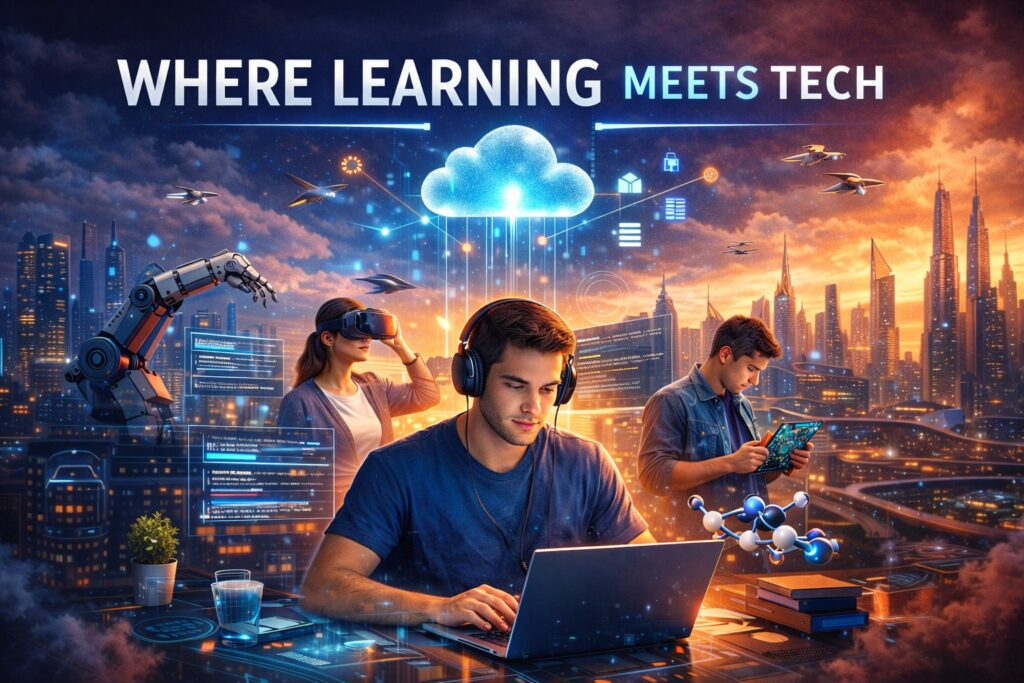
Education is no longer limited to chalkboards, classrooms, or fixed timetables. Today, learning travels through screens, cloud platforms, and interactive systems. When technology blends with education, something powerful happens—learning becomes flexible, practical, and closely connected to real-world needs.
This transformation is especially visible in technical education, where students don’t just study concepts; they experience them.
A New Way of Learning
Traditional education often follows a one-size-fits-all approach. But every learner is different. Technology breaks this pattern by allowing students to learn at their own speed and comfort.
Whether it’s coding, networking, or data-related subjects, learners can now access courses anytime, from anywhere. They can pause lessons, repeat difficult topics, and move ahead when they feel confident. Learning becomes personal rather than pressured.
From Theory to Practice
Understanding theory is important, but applying it is what truly builds skill. Technology-driven platforms make this possible.
Students can write code and see results instantly. Virtual labs allow experimentation without the fear of damaging equipment. Simulators recreate real-world scenarios, helping learners understand how systems actually behave.
This hands-on approach transforms passive learners into active problem-solvers.
Smarter Platforms, Better Support
Modern learning systems are not just content libraries. They are intelligent environments that observe how students learn.
If a learner struggles with a topic, the system suggests extra practice. If they perform well, it offers advanced challenges. This targeted guidance keeps students on the right track and prevents frustration.
Learning becomes guided, not overwhelming.
Skills Over Memorization
Today’s industries don’t look for students who only remember definitions. They seek individuals who can think, analyze, and build solutions.
Technology-based education focuses on:
- Logical reasoning
- Debugging skills
- System understanding
- Creative problem-solving
By working on real projects, students gain confidence in using their knowledge, not just recalling it.
Cloud Technology and Easy Access
Powerful computers and expensive software are no longer barriers. Cloud-based tools allow learners to practice using online environments.
All that’s needed is an internet connection. This creates equal opportunities for students from different backgrounds and locations, making education more inclusive.
Learning with Responsibility
As digital learning grows, so does the importance of ethical technology use.
Students are introduced to concepts like data privacy, cybersecurity, and responsible digital behavior. These lessons shape them into not just skilled professionals, but responsible ones.
Ready for Tomorrow’s Careers
Technology changes fast, and careers evolve with it. The best learning platforms update their content regularly, keeping students aligned with industry trends.
Instead of preparing only for today’s tools, learners develop adaptability—the ability to learn, unlearn, and relearn. This mindset is essential for long-term success.
Why This Matters
When learning meets technology, education becomes more engaging, more relevant, and more impactful. Students don’t just study—they explore, create, and grow.
Technology has reshaped technical education into something more meaningful and practical. It empowers learners with skills, confidence, and real-world exposure.
Where learning meets tech, students don’t just prepare for exams—they prepare for life.